Got a new cellular phone today. It seems that this is what we call "Kishu Henkou" - something like "replacing a cell phone (to new one)".
Actually I had not had a cellular phone for long. If I remember right, I got the first one somewhen around 1999 or 2000. I don't care the model number or the function because I think anyway I am too old to understand how the functions work completely lol....
Also, I don't make calls so often through my cellular phone because usually it means I need to make calls somewhere outside where usually it's noisy. A lot harder to listen to what the other says. So my monthly fee for my cellular has been just a tiny bit.
I was surprised that my monthly fee will be 1/5 ( one-fifth )than before by this replacing with some plans, some discounts etc. I wonder what I have paid for.
I advice you to think about it to replace your cellular phone into new one which means you will get a new contract. This might improve your expense :)
Now I am reading the explanation to learn how this new one works, which is tough for an old man like me :(
Hayaokidori website
Sunday, September 28, 2008


Thursday, September 4, 2008
At Milan central station in 1990
Saturday, August 2, 2008
Harvested potatoes
At this time of the year, we always harvest potatoes we grow. It's the hottest time in the year. But Hakuba provides comfortable climate so it's okay. Thanks god we are not in Tokyo! :-)
After harvesting potatoes, we have to dry them in the sunshine maybe for some days. If you didn't do this, they go bad. We don't want to miss them so we have to do it.
Sometimes ravens steal some while we put potatoes in the sunshine, I didn't know they steal even potatoes.
Hayaokidori website
After harvesting potatoes, we have to dry them in the sunshine maybe for some days. If you didn't do this, they go bad. We don't want to miss them so we have to do it.
Sometimes ravens steal some while we put potatoes in the sunshine, I didn't know they steal even potatoes.
Hayaokidori website
Friday, August 1, 2008
Small green frogs
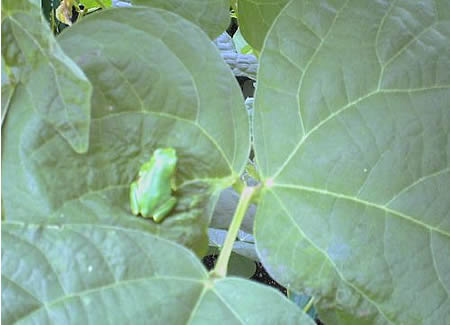 I am not good at sepcifying what kind of frog it is. A small green one which is found here and there around our house and farm. In the farm we can find other kinds of frogs as well, they are definately a lot bigger and different color. Probably this small frog try to hide itself from any enemies which would like to eat it! When it is on a green leaf, perhaps hard for enemies to find it though it is not that hard for human beings. Perhaps our eyes can judge a lot more colors.
At the time of transplanting rice pots, they sing a lot one after another. It's a kind of countryside symbol.
Hayaokidori website
Thursday, July 31, 2008
Pronounciation and description
When we Japanese people pronounce Japanese words described in English alphabet, we just do it as it is described.
For example
OBI ( Kimono belt/s )
ODAIBA ( An area name in Tokyo )
How do you English speaking people pronounce above? :-) Actually the BI for OBI should be pronounced as in BI for BIG, not as in BI for BI-LINGUAL.
But in most cases, English speaking people pronounce that BI for OBI like BI for BI-LINGUAL, so there's always confusing with Japanese people especially if what they pronounce had other meanings. They never accept Japanese way of pronounciation for that OBI lol.....
And when Japanese people say OBI in their own way, English speaking people always write it down "OBE" :o This has been a big "why?" to me, but I noticed that BE is just like BI for BIG for English speaking people. They always pronounce BE as in BI for BIG e.g. "Would BE", "MayBE" etc.
When we say ODAIBA, English speaking people often write it down "ODIABA". I think because a lot often a consonant plus "i" sounds as if that consonant plus "ai". Like Giants, Bi-lingual, Simon, Like etc.
When we notice this tiny thing, we can pressume it easier what English speaing people would describe. But I am not sure when English people notice the correct way to pronounce Japanese words which Japanese people describe in English alphabet :p
Maybe it needs more time :-)
Hayaokidori website
For example
OBI ( Kimono belt/s )
ODAIBA ( An area name in Tokyo )
How do you English speaking people pronounce above? :-) Actually the BI for OBI should be pronounced as in BI for BIG, not as in BI for BI-LINGUAL.
But in most cases, English speaking people pronounce that BI for OBI like BI for BI-LINGUAL, so there's always confusing with Japanese people especially if what they pronounce had other meanings. They never accept Japanese way of pronounciation for that OBI lol.....
And when Japanese people say OBI in their own way, English speaking people always write it down "OBE" :o This has been a big "why?" to me, but I noticed that BE is just like BI for BIG for English speaking people. They always pronounce BE as in BI for BIG e.g. "Would BE", "MayBE" etc.
When we say ODAIBA, English speaking people often write it down "ODIABA". I think because a lot often a consonant plus "i" sounds as if that consonant plus "ai". Like Giants, Bi-lingual, Simon, Like etc.
When we notice this tiny thing, we can pressume it easier what English speaing people would describe. But I am not sure when English people notice the correct way to pronounce Japanese words which Japanese people describe in English alphabet :p
Maybe it needs more time :-)
Hayaokidori website
Wednesday, July 30, 2008
Companion plants
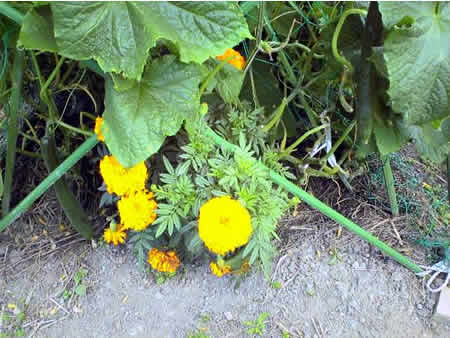 Some plants could work for other plants to avoid harmful bugs. This marygold is a kind of companion plants for our cucumber. Marygold smells strong, it smells like a mosquito coil, but a lot stronger. It's getting the time to harvest cucumber, actually reliable because it's we who grow the cucumber but when it's harvesting time, usually we are to keep having them for a while which is a bit tough sometimes :(
Hayaokidori website
Tuesday, July 29, 2008
Summer greetings
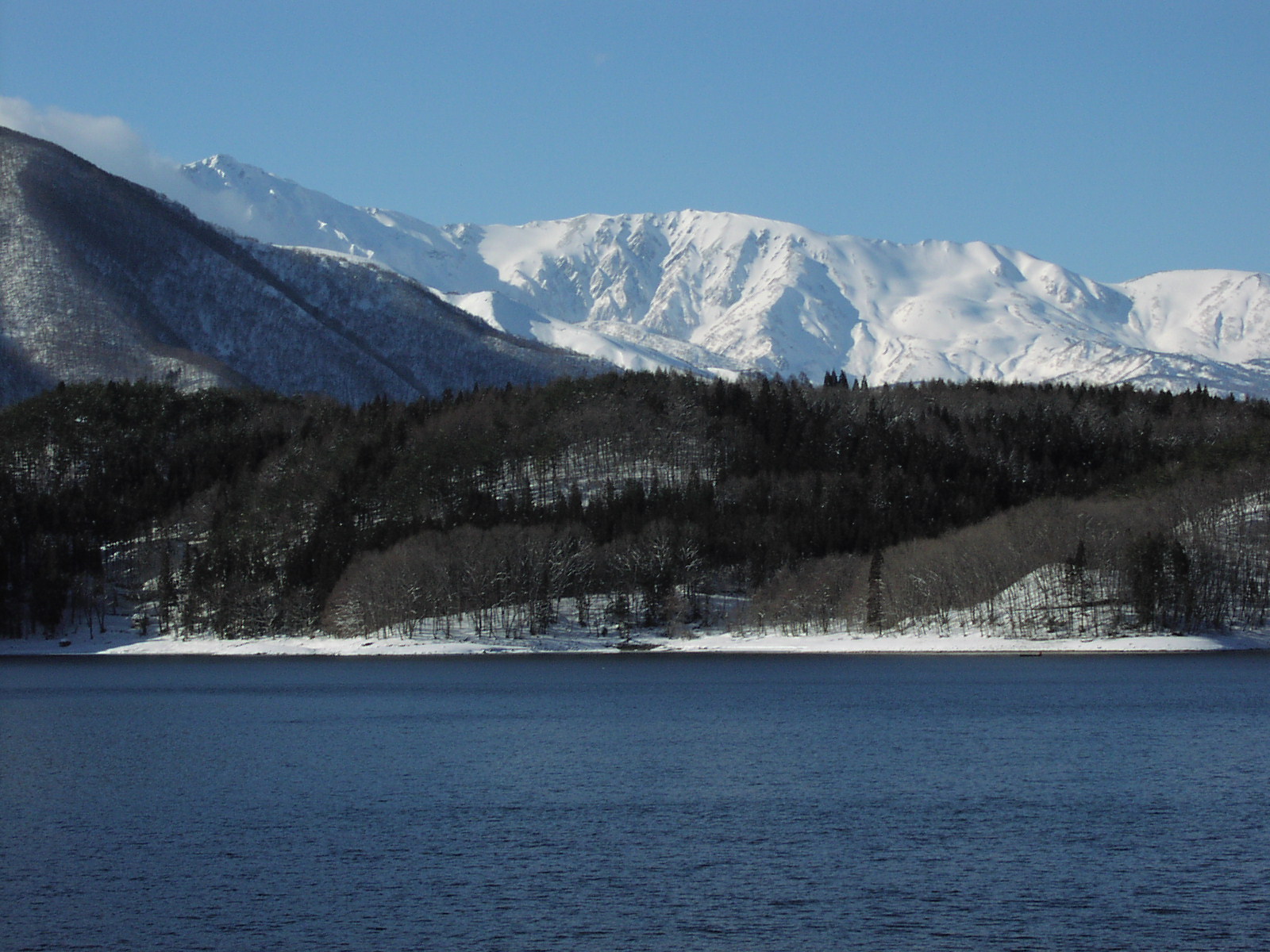 Summer greetings from Hakuba.
It seems that it's been hot in big cities in Japan, I hear something like the max temperture in a day is 39C somewhere in Japan, sorry to hear that.
Like as usual I hope this cool picture helps them to feel cool.
Though it's very cold and snowy in winter in Hakuba, we spend easier time than in big cities in summer. Hope everyone could make it to spend some time here in summer.
Hayaokidori website
Subscribe to:
Comments (Atom)